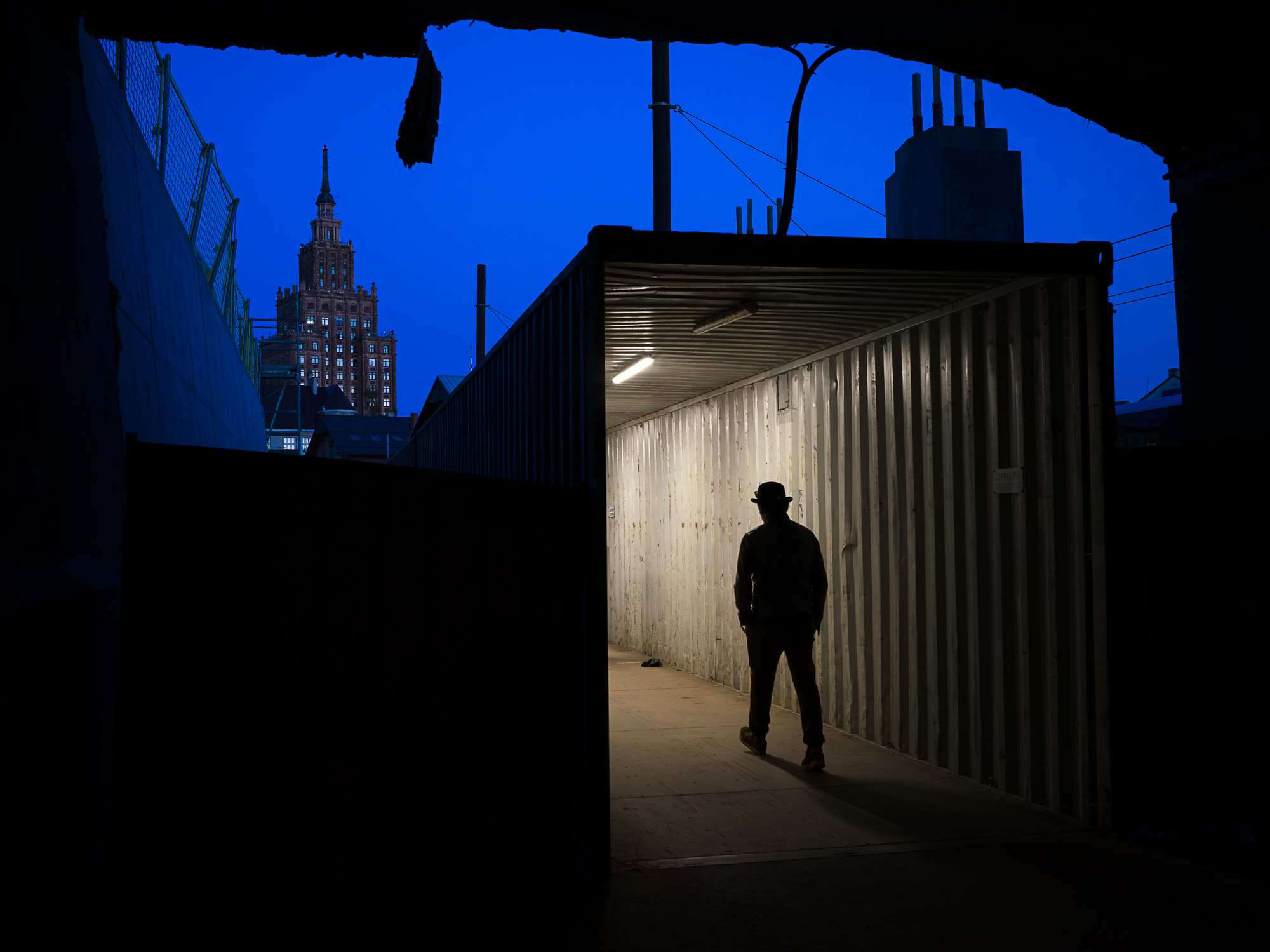
Estonia
We visited Estonia in the winter of 2023, exactly one year after the war in Ukraine started.

A woman braves the cold in a neighborhood on the outskirts of Narva, Estonia's largest city with a predominantly Russian-speaking population, where 97% of the residents speak Russian.

The architecture in Narva is dominated by tall apartment blocks from the Soviet era.

Laundry is hanging outside to dry in Sillamae, a small town near Narva on the Russian border.
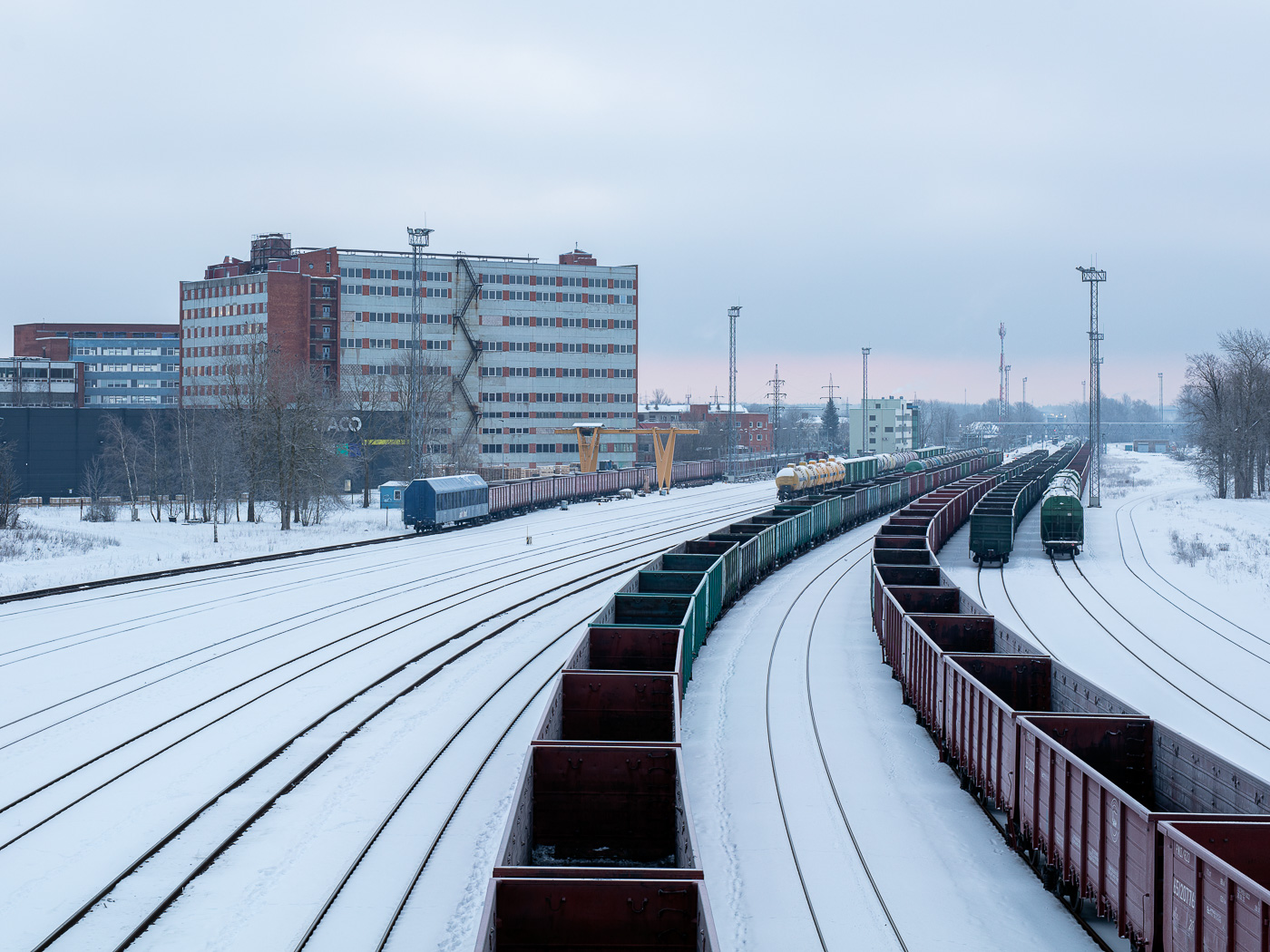
Freight trains are parked at a railway yard in Narva, near the Russian border.

Outside Maarjamäe Palace in Tallinn, Estonia, a collection of discarded Soviet statues can be found. On display are Soviet icons like Joseph Stalin and massive heads of Vladimir Lenin, with many pieces sculpted by Estonian artists between 1945 and 1990.

Viivikonna in the border region of Ida-Virumaa was once a place for Russian workers in the local oil industry. Now it's a ghost town, with only about 100 residents left.

Sillamäe in northeastern Estonia was an important coastal town in the Russian Empire in the late 19th century, later evolving into an industrial city. During the Soviet era, it was a restricted military area and was not found on maps because of its uranium mining and enrichment operations. After the collapse of the Soviet Union, its industry declined, and the city fell into disrepair. Today, it has about 12,000 residents. Thanks to its abundance of Stalinist architecture, it has become a tourist attraction.

An abandoned textile factory of the Krenholm Manufacturing Company sits on a peninsula in the Narva border river. In 1960, the company was the largest textile manufacturer in the Soviet Union, employing 10,000 people. The transition to a market economy in the 1990s was challenging, and the company went bankrupt in 2010.
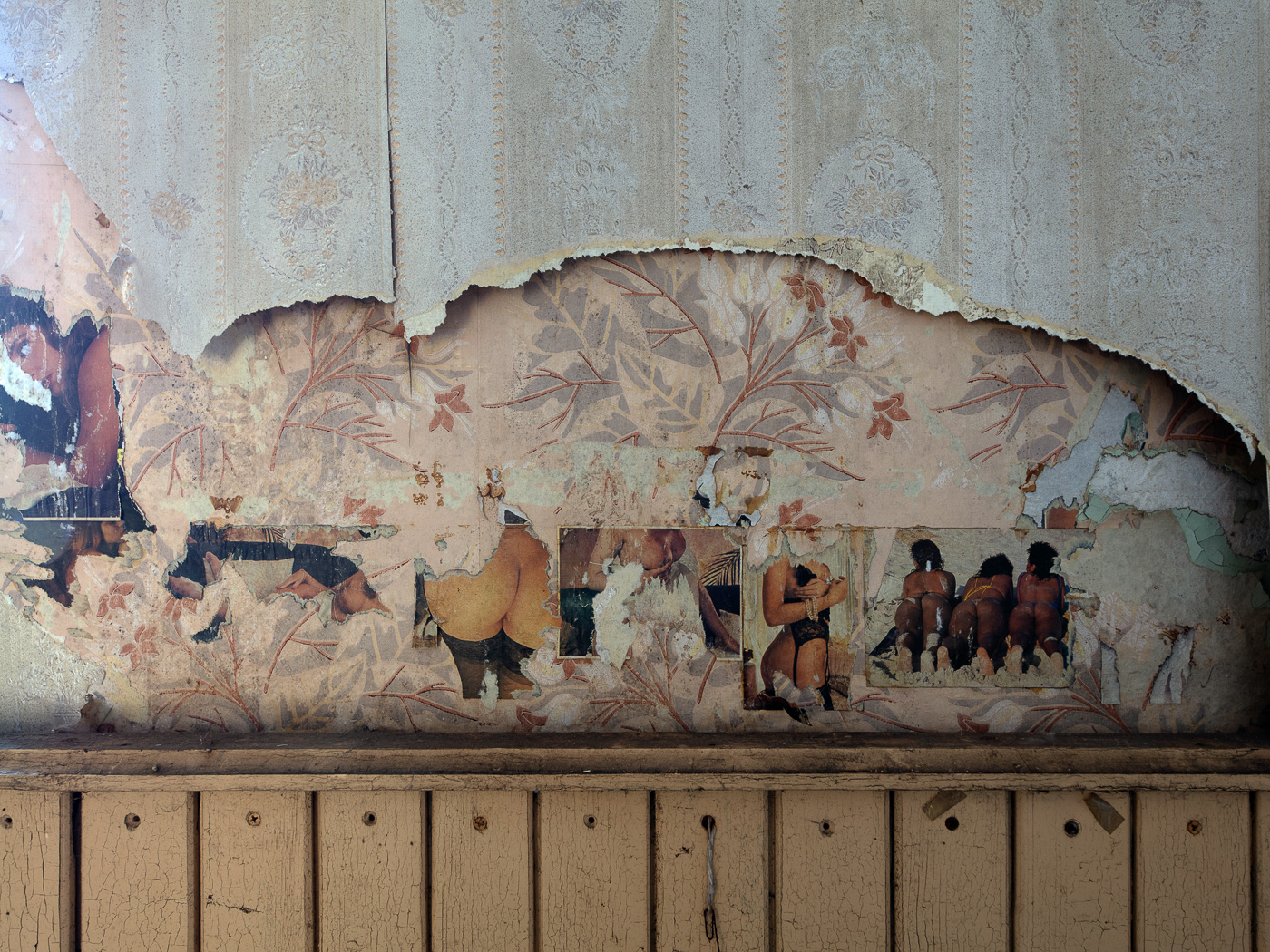
The torn wallpaper in a room of a former textile factory in Narva reveals some hidden secrets.

Arina Jegorova works for the Narva Art Residency, where she helps to take care of the residents who are invited to create contemporary art.

Nikita Tremonin is working on an architectural project at Narva Art Residency. He fled Russia to avoid military conscription, missing the birth of his child. His wife, who stayed behind in Russia, is waiting for her visa to enter the EU.
“Opening Estonian news feels like a catastrophe; they’re constantly playing with your emotions. Even reading a headline makes you think, ‘Oh my god, I don’t want to know.’ During elections, politicians amp up the competition and push nationality questions, like, ‘If a war starts, will you be on the Russian side or the Estonian side?’ They always want to categorize you. In the end, you just want to live your life without dealing with all that.”

For centuries, two large fortresses have stood on either side of the Narva River. The one on the left belongs to the Estonian city of Narva, while the one on the right is part of the Russian town of Ivangorod. The border runs through the middle of the river. Recently, the bridge has been closed to vehicles, and now the border can only be crossed on foot.

The border between Estonia and Russia, marked by the center of the Narva River, is secured with barbed wire.

A morning mist hovers over the Narva River, where the center of the bridge marks the border between Russia on the left and Estonia on the right.

A man and his son climb a snowy hill in front of the Tallinn Song Festival Grounds, a site of significant importance in Estonian history. Hundreds of thousands gather here to sing in a choir.
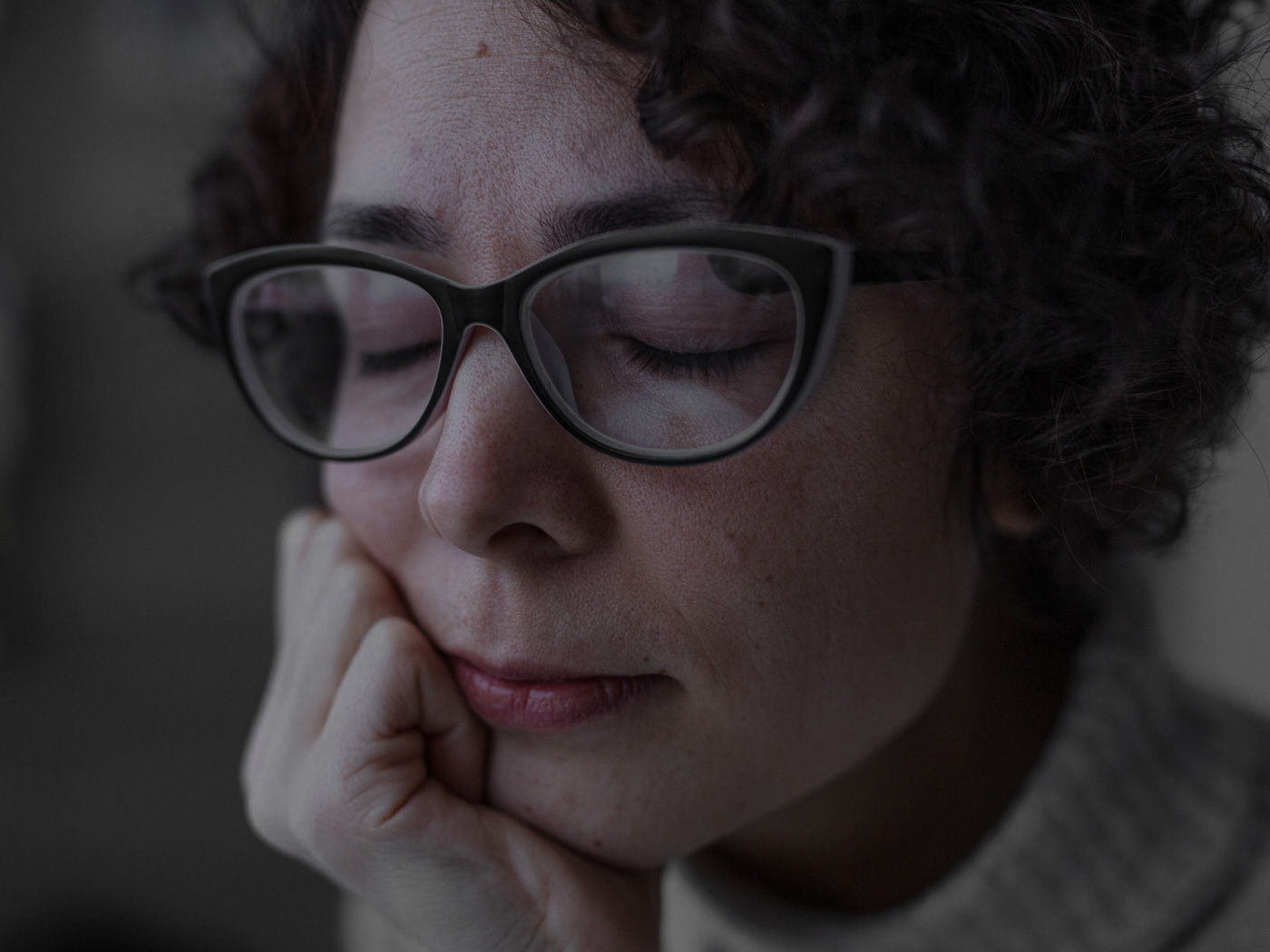
Anna Shulika fled from Donetsk with her two children back in 2014, before she moved to Tallinn in 2022. The Independence Day celebration on February 24 was bittersweet for her. On the one hand, she wanted to celebrate freedom with the Estonians and is very grateful for what the country has done for her. On the other hand, it was a painful moment because it marked exactly one year since Russia invaded Ukraine.
“I feel like a plant that’s been transplanted, trying to establish roots only to be moved again. That’s how I feel, like a flower. Now I need to settle down. I think I’m finally starting to take root here in Tallinn. When I have things to do, when I have a safe place to return to, and when I know my children are alright, I don’t feel tired.”

Anna and her two daughters in their appartment in a suburb of Tallinn.

Anna attends a film night hosted by the Ukrainian community in Tallinn.

A girl walks through Tallinn with the Ukrainian flag during a protest against the Russian invasion of Ukraine.

Conscripted soldier Henri Kalvik poses during military training at a training ground near the town of Tapa, where Estonia's largest military base is located.
“During intense training I think about what my ancestors went through. They also served in the army. I took an oath to defend the country. I’d rather die fighting for our independence and the people I love than do nothing. What’s the point of running away?”

Henri Kalvik in action during a training at military base in Tapa.

Henri Kalvik in action during a training at military base in Tapa.

Outside the Russian embassy in Tallinn, opponents of the war have hung a large number of protest signs.

On February 24th Estonia celebrates its independence. In the historic center of Tallinn, the national flag is raised early in the morning on Pikk Hermann, one of the corner towers of Toompea Castle, the medieval fortress that also houses the parliament. Thousands of Estonians watch. Students with banners line up in rows, children wave flags, and everyone sings the national anthem with great spirit.

People watch intently as the flag is raised on Independence Day in Tallinn.

Estonia's Independence Day celebration on February 24, 2022, coincided with Russia's large-scale invasion of Ukraine. A year later, the celebration carries even greater significance.

A student goes head-to-head with the vice-rector of Tallinn Technical University in a beer drinking contest on Independence Day.
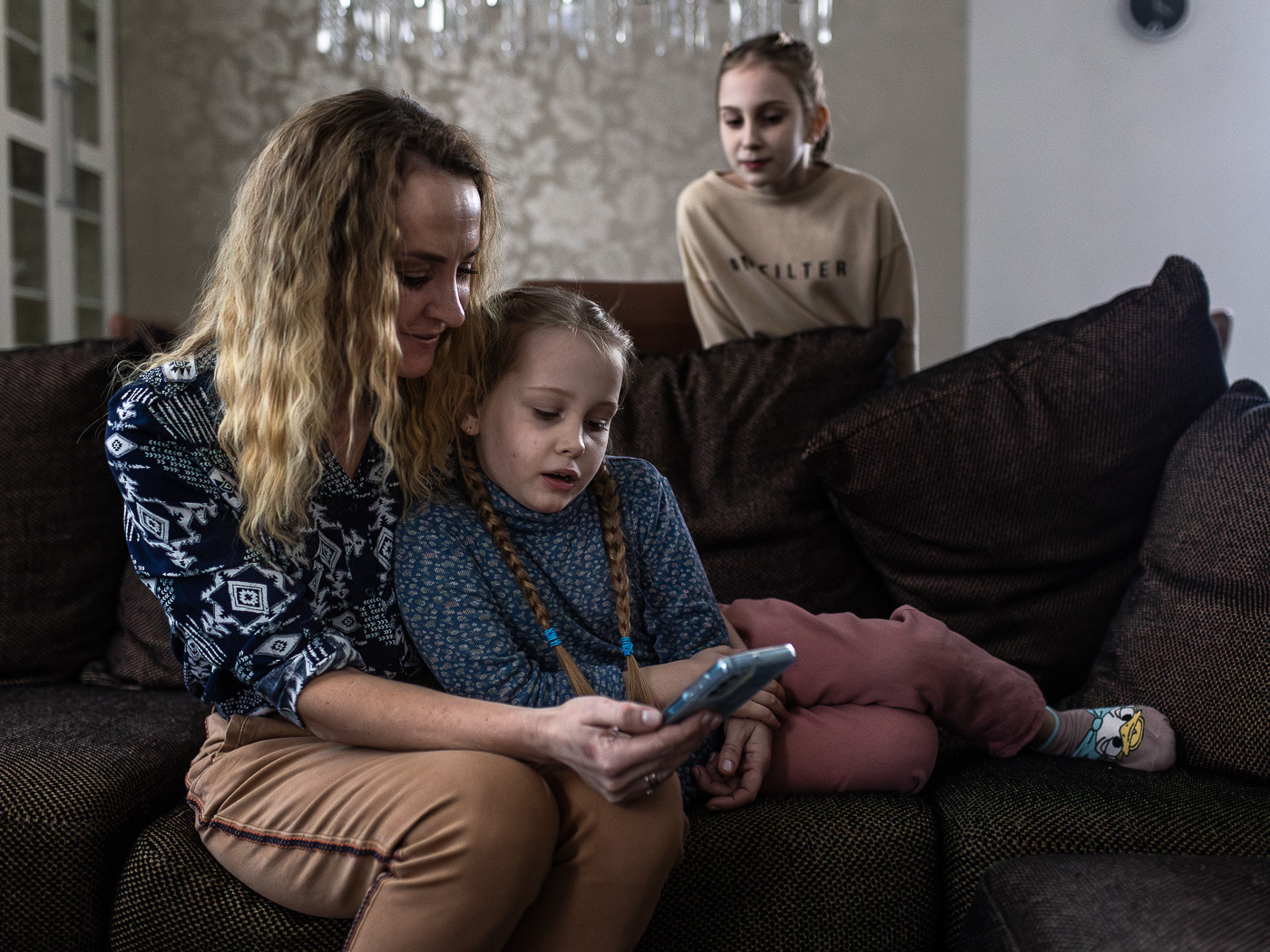
Svitlana and her two daughters watch Ukrainian President Zelensky's speech on February 24, exactly one year after Russia began its invasion. It's also the day Estonia celebrates its independence from Russia.
“I’ve always spoken Russian in Odesa. Since the war broke out, I’d rather not speak Russian anymore, even though I have to use it here in Estonia sometimes. In that sense, Putin did us a favor. Ukraine was always divided into different regions, but now everyone speaks Ukrainian. Forty-one million people now speak the same language, even if it’s not always fluent. The realization that we’re free and never want to be under someone’s occupation again is enormous. No one should dictate what we should do.”

Children are allowed to operate a cannon on a military truck parked in Freedom Square after the Independence Day military parade.
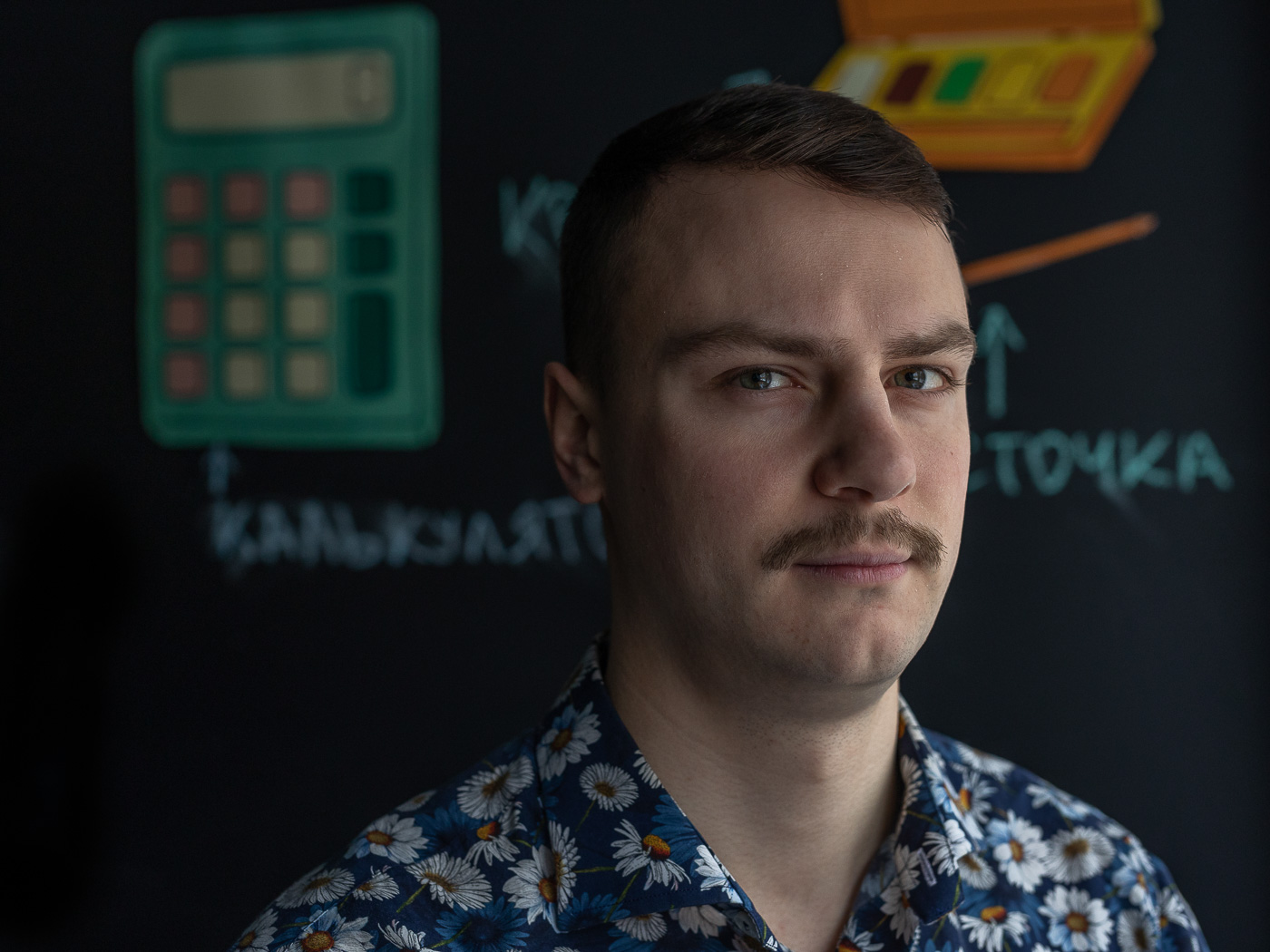
Former teacher Aleksei Jašin in a classroom at the private Avatud School in Tallinn, which educates both Estonian- and Russian-speaking children. The experiment with mixed-language education started in 2017 and is gradually being adopted in other parts of Estonia.
“I have a dream. On the day Russian-speaking children no longer attend separate schools, I’ll drink champagne and take some time to think about the next goal in my life.”

Aleksei shows a picture on his phone where he holds a sign saying 'Russian Estonians against the war', a few days after the invasion of Ukraine started.

Aleksei celebrates Independence Day with his parents. They eat traditional food and watch the military parade live on television.
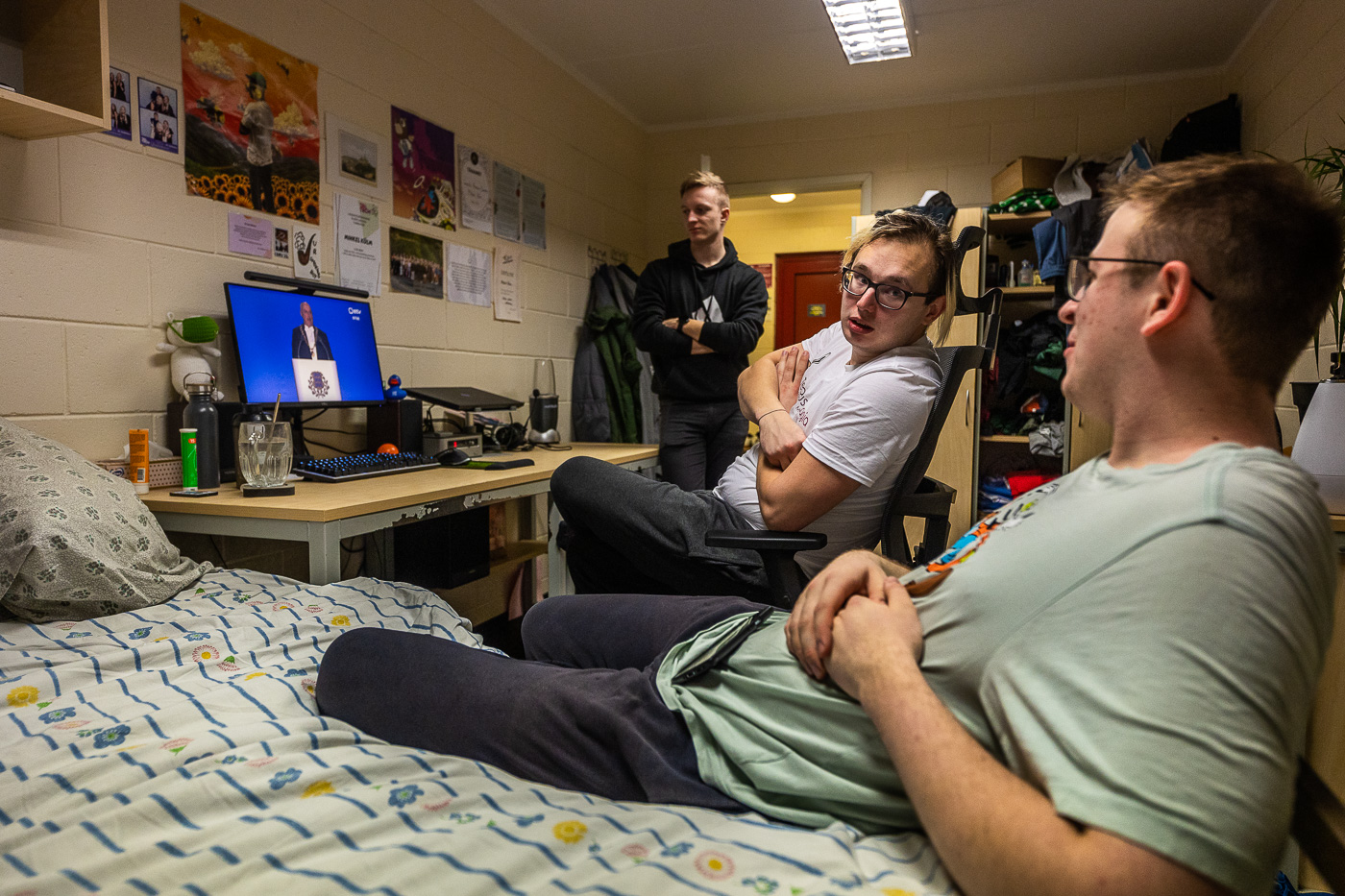
Mairo Mitt and his flatmates watch the Independence speech of president Alar Karis.
“I know the stories from my parents about life during Soviet times. The war in Ukraine made me realize that our freedom isn’t guaranteed. But it’s only meaningful if we also enjoy it. And today, I’m doing that more consciously than ever.”

Estonian flag in the dorm room of Mairo.
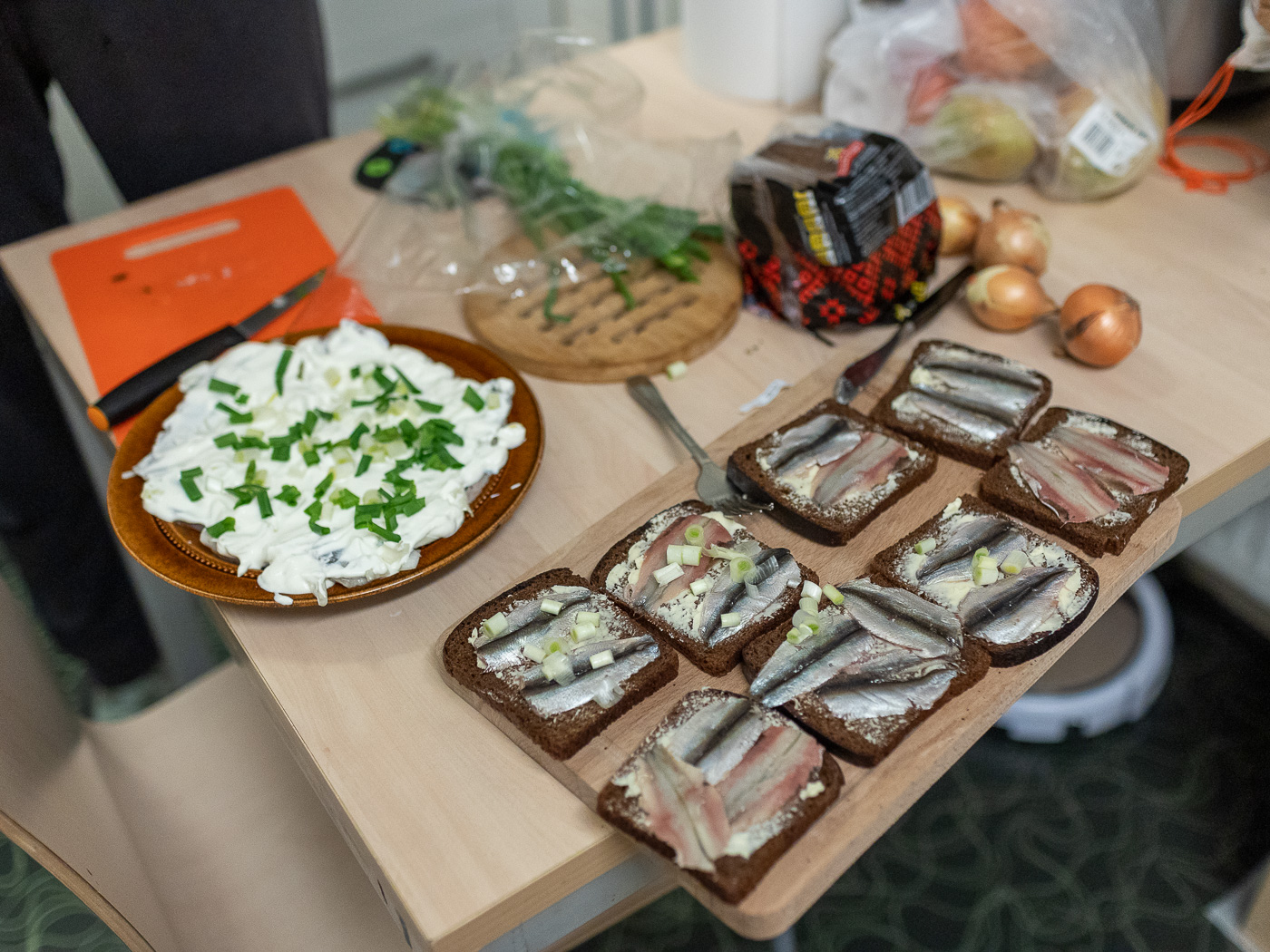
Mairo and his flatmates made kiluvõileivad, a traditional of rye bread with marinated sprat fillets, onion, and egg.
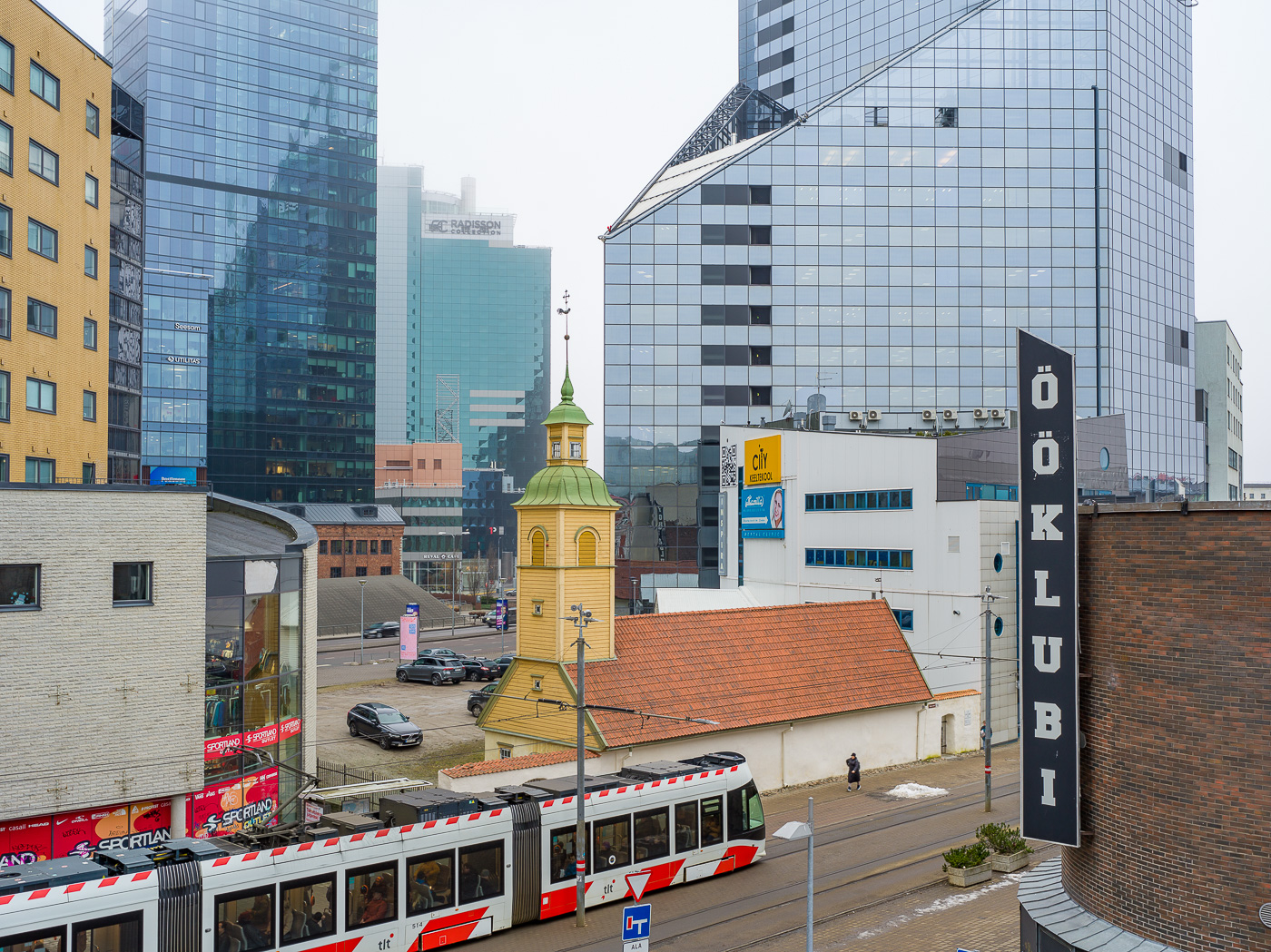
The Maakri district in Tallinn rapidly transformed into a business hub after Estonia joined the EU in 2004. Traditional wooden houses gave way to modern office buildings. However, the St. John's Church, whose history dates back to the 14th century, has been preserved.
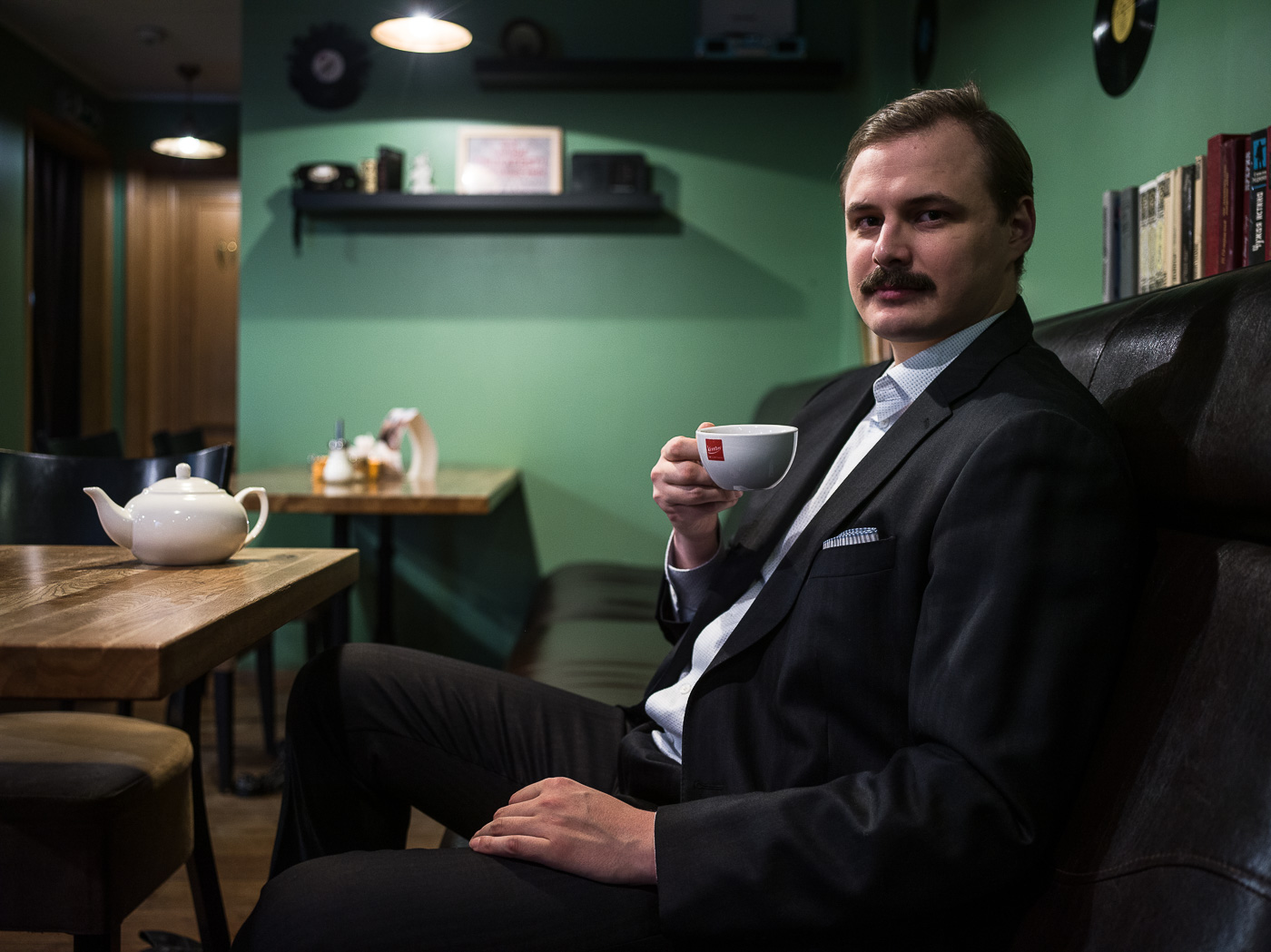
Tiit Viitso is a young politician for the conservative party Parempoolsed. He served for the Estonian Defense League and the army and sees himself as a patriot. "Our parents and grandparents were incredibly happy about it. So, we were raised with a sense of pride in Estonia's independence."
“We haven’t been able to clearly communicate that when we remove a Soviet tank or another Russian war monument, we’re doing it because these are symbols of our country’s occupation. It doesn’t mean we hate the descendants of the soldiers who fought back then or want them gone.”

The Maarjamäe Memorial was built to honor those who died defending the Soviet Union. Nowadays it has become the target of heated debates.

The Victims of Communism Memorial in Tallinn honors the Estonian people who endured Soviet terror. Estonia, with a population of just over one million, lost a fifth of its people. Over 75.000 were killed, imprisoned, or deported.

The Bronze Soldier is a debated Soviet war memorial in Tallinn, erected at the site of multiple war graves.